Justyne Bennett thinks like an athlete, trains like an athlete and hasn’t let a life-changing accident interfere with her goal of being the best athlete she can be. Bennett, 20, was injured in October 2021 during a lunch break from Frontenac Secondary School. She was riding her Ninja motorcycle along Front Road in Kingston when a vehicle made an unsafe left turn in front of her. As a result of the crash Bennett broke her spine at her T4 and was unable to walk again.
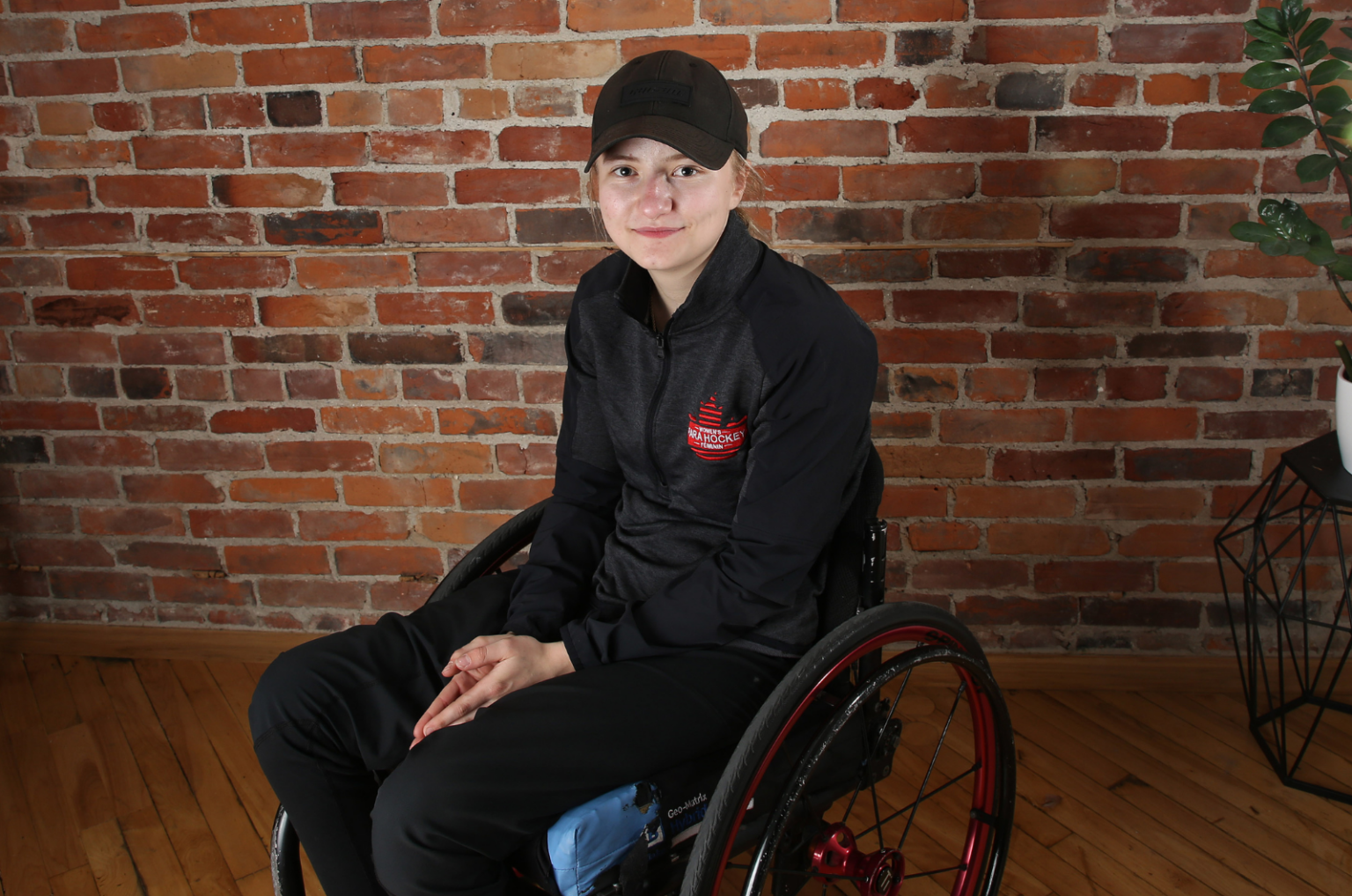
“I knew as soon as I hit that car and couldn’t use my legs, I was even saying that while I was on the ground, ‘I’m paralyzed,’” Bennett said during a recent interview at the Tourism Kingston office.
Before the accident, Bennett was a busy young person who played hockey and other sports. Afterwards, she says, “I wasn’t in my right mind set – I’m paralyzed, I can’t walk, I can’t do the things I love anymore, I can’t play hockey anymore or any sport, I’m useless in the world. “But as time went by, I had to accept myself more. But it was really hard at first, I just really didn’t want to live life anymore after I got hit.”
It took time.
“Eventually, with all the right people around me, I realized I still have my arms I can use and I can do so much, but I have to do things in a different way.”
Flash forward to early March 2024. Bennett made her national sport debut for Canada as one of three goalies named to the Women’s Para Hockey Canada team. Prior to the accident Bennett was what she calls “a stand-up goaltender” playing competitive hockey with the Kingston Ice Wolves. When she was undergoing rehabilitation at Providence Care, staff knew she played hockey and suggested she eventually try sledge hockey, also known as Para Ice Hockey.
Then she met Dave Baldwin – also a wheelchair user; Dave encouraged and mentored Bennett on how to be a goaltender in sledge hockey. “He helped me make a lot of adjustments so I felt I could play a lot better. When the national team were up in Ottawa, Dave told the people there I used to play stand-up competitive hockey. That’s when they kind of took a look at me. I was playing for an American team, but they noticed I was a Canadian.”
After the game Bennett was told the Canadian national team would be in touch with her. “Dave was a big part to help me get to that point.”
Sadly, Baldwin died in 2023, before he was able to witness Bennett’s evolution in the sport.
Bennett was invited to tryouts in the Niagara Falls area in January and made the team as one of three goalies. After that she went to Minot, North Dakota for a three-game series against the United States received playing time. She returned from a three-day training camp in Calgary in mid-May.
“It was my first experience playing at the national level; I got a few minutes out of it and it was a good learning experience of what they’re capable of and how they can pinpoint where to shoot.”
She has also attended a Paralympic goaltender clinic. Bennett explains the difference between stand-up and Para goaltending. With stand-up goaltending, a player can use their legs to move back and forth and their gloves to hold the stick and catch or block the puck. In sledge hockey, a player can’t use their legs and their arms are for movement as well as making saves. So, arm strength is extremely important.
“You have to have a fast reaction time and get your arms up there to make a save.
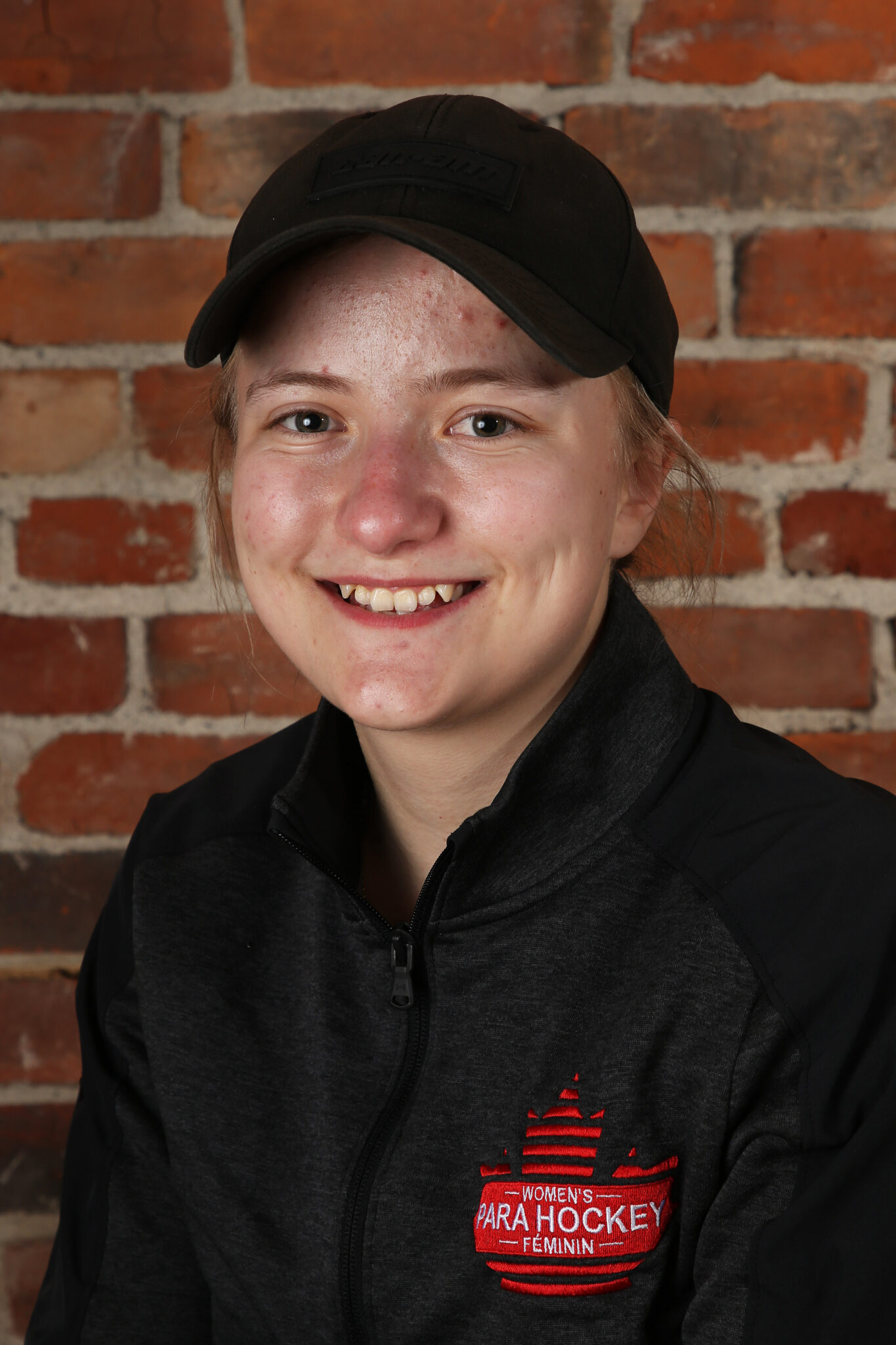
I had to re-learn how to play the position. In a sense it’s the same as stand-up hockey with all the hockey sense but positioning-wise, just the movement is completely different.”
Playing sledge hockey is not easy, Bennett says, adding that junior hockey players have tried the sport and had a difficult time adapting to it. “It really inspired me too, watching these people and what they can overcome.”
Off-ice, Bennett is in her second year at Loyalist College in Belleville taking the welding and fabrication program. There, she is adapting to a program and occupation that can have some obstacles for wheelchair users.
Initially, in her welding and fabrication program, she found that the machines were not accessible; welding tables were set too high for her to use.
But Bennett had help from Loyalist staff and other students. “They were very lovely there; they would move down the machine and adjust the table,” she says. “After I’m done with my apprenticeship, I want to start my own business and have it fully accessible for people who have disabilities to come in [and work].”
Over two-and-a-half years after her accident, Bennett is philosophical about her situation.
“This happened to me but in a sense, I’m not disabled, it’s just I can’t use these,” she says, gesturing to her legs. “I’m still going to do the same thing, just in a different way. It’s not going to stop me or anything.”
“I always try to surround myself with good people, otherwise you’re not going to be in the right mindset,” she continues. “You’re always going to have down days, but you just have to push through it. What I always say to people is you’re only going to live once; you don’t know what’s down the road for you and if something presents itself to you, just take the opportunity. There’s always going to be risks involved with anything you do, so just see where it leads you.”
